Dr. Tshering Pedon, MBBS, is trained at the University of Colombo with clinical internships in internal medicine and obstetrics and gynecology. Her research focus has since moved into peptide science. She writes the Kylo blog, covering mechanism-of-action studies, signaling pathway research, and the published literature on the peptides in the catalog.
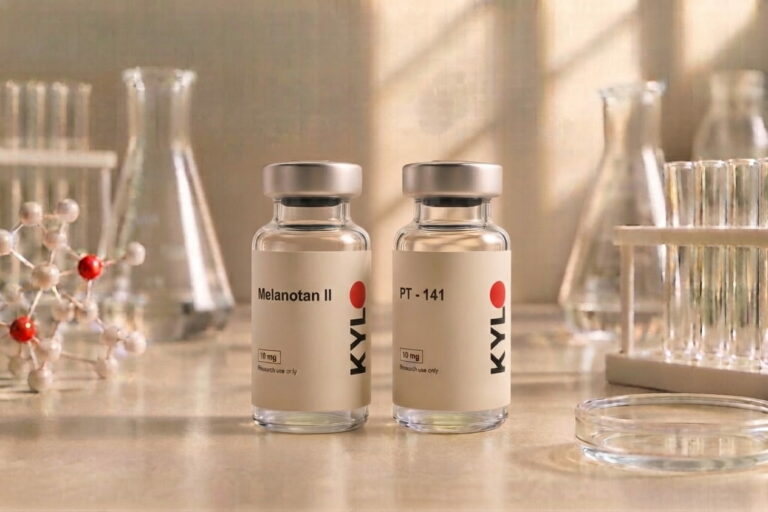
PT-141 Vs Melanotan 2: A Research Comparison
PT-141 and Melanotan II are synthetic melanocortin peptides with related structures but distinct receptor pharmacology and research profiles. PT-141 (bremelanotide) is a cyclic Melanotan II-derived peptide…
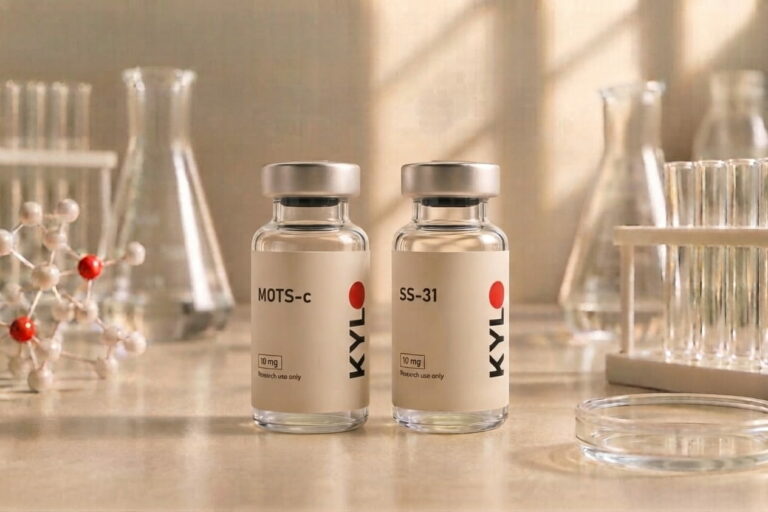
MOTS-c vs SS-31: A Research Comparison
MOTS-c and SS-31 are mitochondrial-targeted research peptides with distinct structures, origins, and mechanisms of action. MOTS-c is a 16-amino-acid mitochondrial-derived peptide encoded by mitochondrial DNA and…

Semax Vs Selank: A Research Comparison
Semax and Selank are synthetic regulatory peptides with distinct structures, origins, and neurobiological research profiles. Semax is a synthetic ACTH(4-7)-derived heptapeptide studied primarily in neurotrophic and…

BPC-157 vs TB-500: A Research Comparison
BPC-157 and TB-500 are experimental peptides studied for tissue repair and regenerative biology, but they differ in molecular structure, origin, and proposed mechanisms. BPC-157 is a…

Ipamorelin vs Sermorelin: A Research Comparison
Ipamorelin and sermorelin are synthetic growth hormone secretagogues with different receptor targets, signaling mechanisms, and pharmacological profiles. Sermorelin is a 29-amino-acid GHRH(1-29) analog that activates GHRHR,…

Tesamorelin vs Sermorelin: A Research Comparison
Tesamorelin and sermorelin are synthetic GHRH analogs that both activate GHRHR, but differ in structure, stability, and pharmacological activity. Sermorelin is the 29-amino-acid GHRH(1-29) fragment, while…

Retatrutide vs Tirzepatide: A Research Comparison
Retatrutide and tirzepatide are investigational synthetic peptide compounds with distinct receptor profiles and mechanisms of action. The main difference is that retatrutide is a triple agonist…

Tirzepatide vs Semaglutide: A Research Comparison
Tirzepatide and semaglutide are synthetic incretin-based peptide compounds with distinct molecular structures and receptor activity. The main difference is that semaglutide selectively activates GLP-1R, while tirzepatide…

The State of Research Peptides 2026
Market Growth, Regulatory Change, and Why Verification Has Become the Dividing Line A data-driven review of the research-use-only peptide landscape Published August 2026 · Kylo Labs…

HPLC vs. Mass Spectrometry: What Each Test Proves About Peptide Purity
HPLC vs. mass spectrometry comes down to one line: HPLC tells you a peak is there, and mass spec tells you what that peak is. HPLC…